
Confirmed So Far · gameplay
Black Myth: Zhong Kui — 15-Minute Gameplay Reveal Breakdown
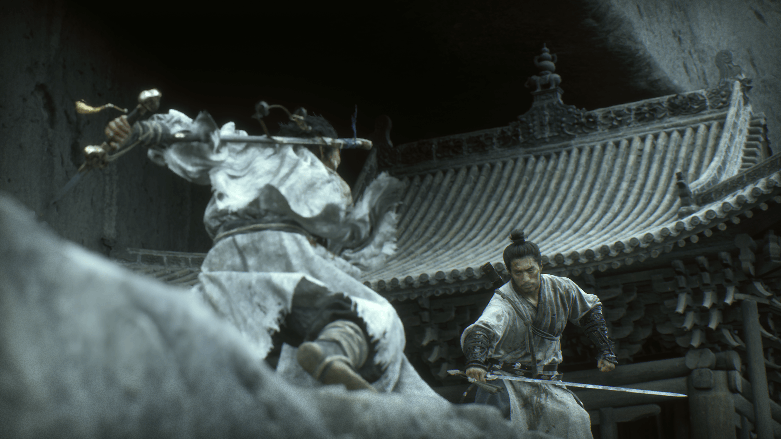
On August 20, Game Science released the first gameplay demo for Black Myth: Zhong Kui. Fifteen minutes, one continuous shot, 21:9, captured in an early build. It passed a million views on Bilibili in about fifty minutes.
I watched it a few times, then went back to the Tang and Song texts that describe Zhong Kui himself. What follows is what the footage shows. Where I'm making a judgment rather than reporting a fact, I've said where it comes from and how far it goes.
1. What the fifteen minutes show
The demo opens on mountains and water. The protagonist is dressed as a white-robed Daoist, poling a raft alongside an old man. A wave takes them both.
What follows is combat, and combat is what Game Science wants you looking at.
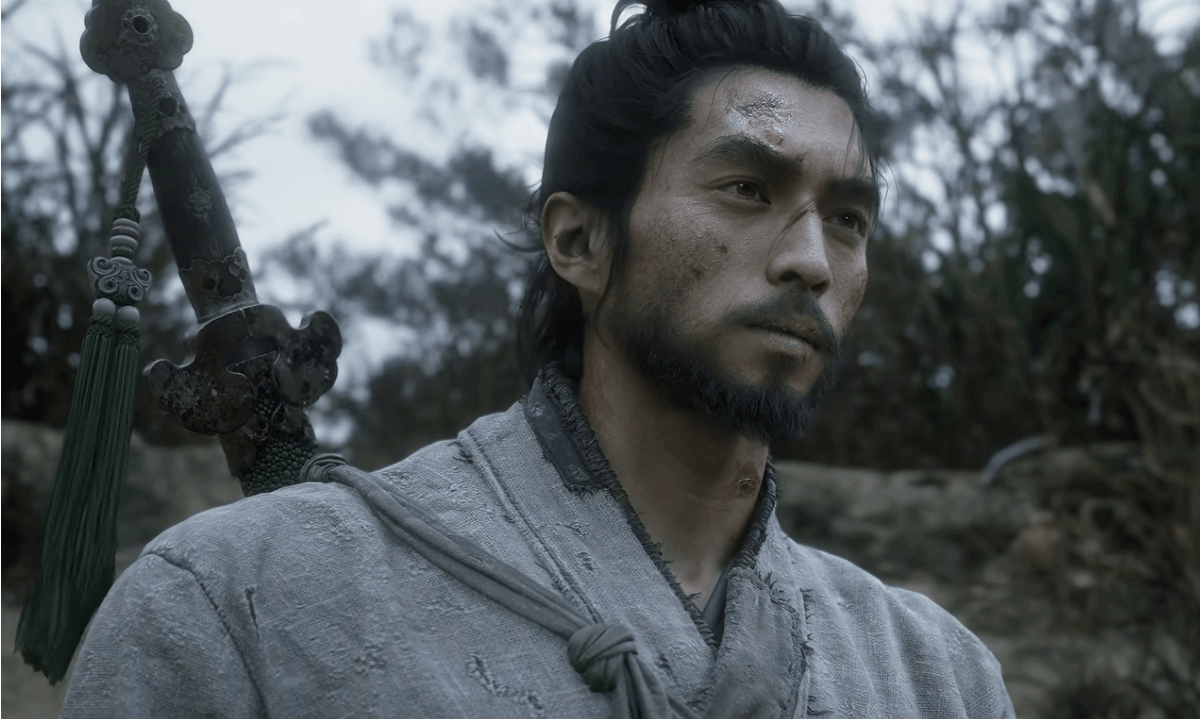
One sword, parries, dodges, combos, executions, all inside a camera that never cuts.
The old man dissolves into a paper talisman mid-fight. It doesn't leave. It turns up at several later points to lead the protagonist forward, and in one brawl it tangles up smaller enemies.
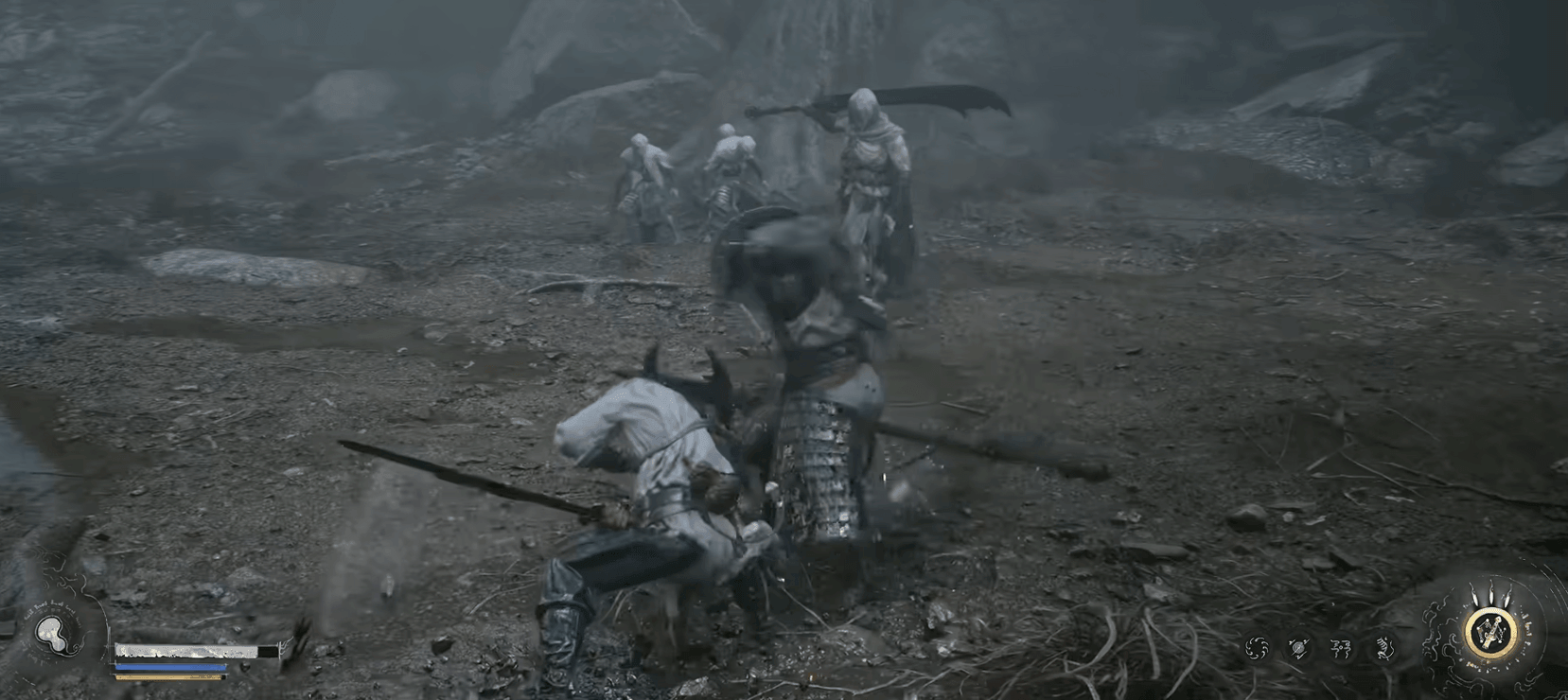
There is also a female water ghost whose design drew most of the comment. Around her are pale-cloaked spirits, a wide-brimmed straw-hat demon, and a hound-like creature, plus a trio of skeletons playing backup, one on the erhu, one on flute, one on drums.
2. Is the protagonist Zhong Kui?
Probably not, in my reading. Game Science hasn't said either way, and I'm not working from anything private.
The sources agree on one point. In the Tang Yi Shi, a late-Tang account, Emperor Xuanzong falls ill and dreams of a small ghost stealing Yang Guifei's perfume pouch and his jade flute. A larger ghost catches it, gouges out its eyes and eats it. He introduces himself as Zhong Kui, a jinshi of Mount Zhongnan who failed the imperial examination and, ashamed to go home, killed himself against the palace steps. The emperor had him buried in a green robe. He swore to clear the empire of its demons.
Shen Kuo, writing four centuries later in the Dream Pool Essays, transcribes a Tang-era colophon on a Wu Daozi painting of Zhong Kui held in the imperial collection. Same story, with the title given as a failed military candidate. Shen Kuo also notes that the name long predates the Kaiyuan era: Zong Que's sister in the Liu Song dynasty was called Zhong Kui, as were a Li Zhongkui under the Northern Wei and a Qiao and Yang Zhongkui under the Sui.
By the Qing dynasty the novel Zhangui Zhuan rewrites the ending again. Zhong Kui is rejected at the examination, cuts his own throat, and is appointed a demon-quelling marshal in the afterlife. His ugliness costing him the post belongs to this later layer.
Across all three, he is a scholar while alive and a god only after death. Daoism adopted him centuries later. The rank is posthumous.
Which makes the white robe worth explaining. The thread is Mount Zhongnan. He calls himself a scholar of Zhongnan, and that range carries unusual weight in Daoism. Louguantai sits inside it, the place where Laozi is said to have taught the Daodejing to Yin Xi, traditionally called the ancestral temple of the tradition. The Quanzhen school grew out of the same mountains. Zhong Kui's hometown is in the core of the range, and in 2011 the local Zhong Kui folk-belief tradition entered Shaanxi's provincial intangible heritage list. A god from Zhongnan, placed inside a Daoist frame, isn't a contradiction.
At the very end of the demo, in a montage, Zhong Kui himself appears riding a tiger. Game Science later said the image came from a Ming painting of Zhong Kui on a tiger, and from a dream by art director Yang Qi. It is the only clear look at him in the fifteen minutes. How closely that design matches the protagonist is something the studio has left alone.
3. Spirit summons and possession
The protagonist throws talismans to summon spirits that fight alongside him. Wukong gestured at this with its transformations. This goes further.
The summon stays on the field far longer than expected, still present through the boss execution animation, with no stated time limit. It fights on its own, trades blows, and in one brawl takes a hit meant for the protagonist.
Possession is the clearer statement of intent. The protagonist can transfer into the black-cloaked figure he summoned and fight as him. The figure stands taller, his swings are wider, and the whole move set and skill list swap over. The lightning enchantment already on the blade carries across. The execution is a two-character animation played out in real time.
4. Sword, stance, and talisman icons
Wukong used a staff. This is a single sword and a more grounded wuxia feel.
Normal attacks, perfect dodges and precise parries build a "sword stance," the same logic as Wukong's staff stance, and the points spend on heavier moves. A new deflect-parry branches into a counter that both builds stance and staggers the target. A perfect dodge chains into a heavier strike.
Two spell lines were shown, fire and lightning. Fire spreads, burns ground, and enchants the blade. Lightning is about interrupts and crowd control, and once it lands, rain starts falling, which suggests spells can drive the weather system.
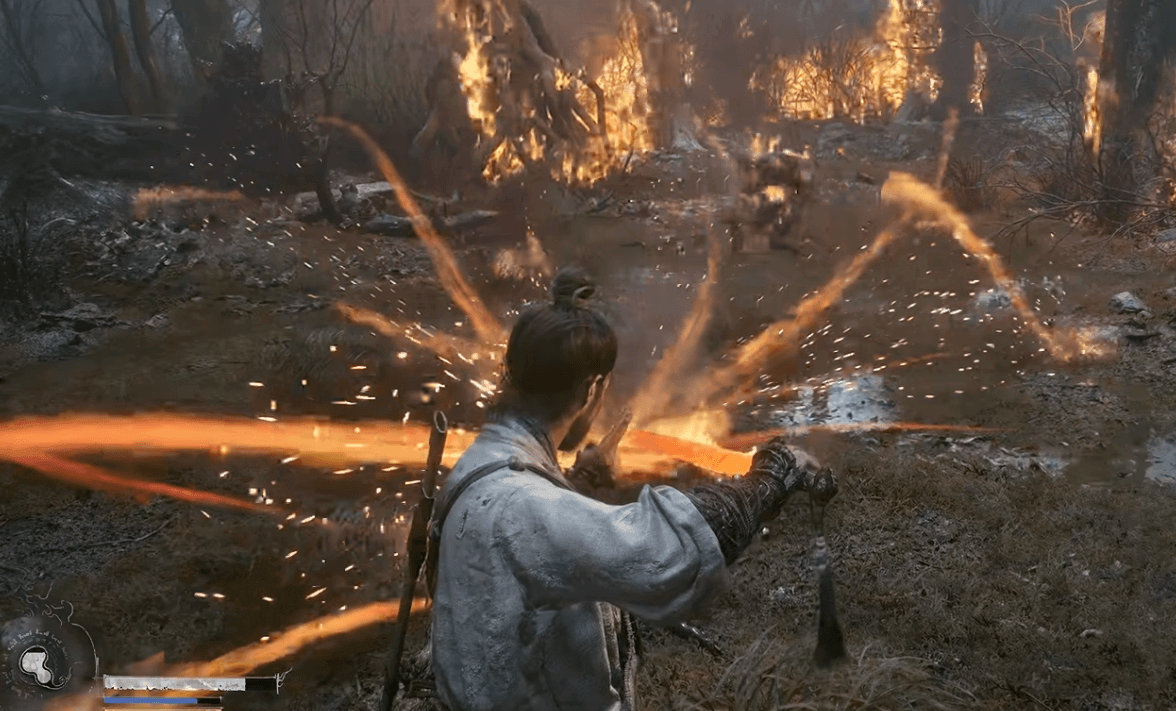
Bottom left is health and spirit. Bottom right is a four-slot skill bar. The four icons are drawn from real Daoist talisman script. I can't identify which seals they come from, but they aren't generic decoration.
5. The clam boss
The back half of the demo is a full boss fight against a creature the studio calls the Great Clam Lord, running about four minutes.
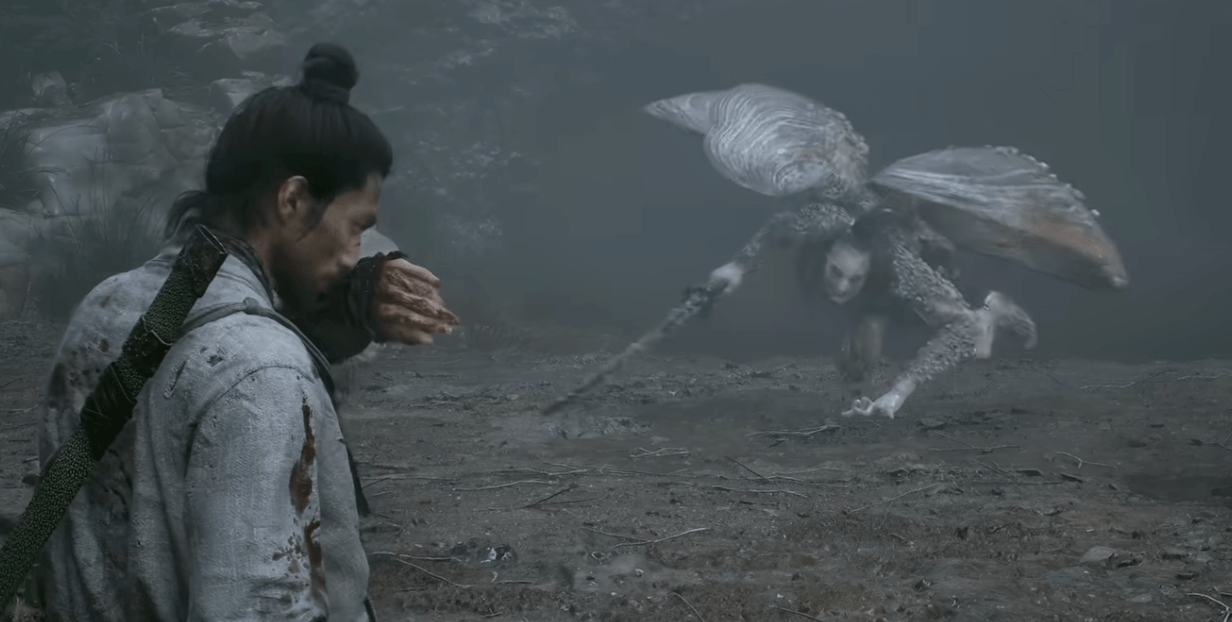
It carries two enormous shells and charges hard. The shells are breakable. Crack one open and its move set shifts into a second phase. Barnacles cover its body densely enough that viewers filled the comments declaring themselves trypophobic. The arena is wet tidal flat.
You dodge the charges and hit the soft tissue when the shells open. That window-based rhythm is the one Wukong used for its breakable bosses.
6. How far Game Science will commit
The studio is being careful. The footage comes from a work-in-progress build, the final game may differ, development is early, and there is no release date. It is not a sequel to Wukong and not DLC. Platforms are listed as PC and unannounced consoles.
A year ago the language was different. Zhong Kui was announced at Gamescom's Opening Night Live on August 20, 2025, with a CG teaser: Zhong Kui riding a tiger, folding fan in hand. At the time the studio admitted how little existed, saying they had "only just created the folder, and there's no gameplay to speak of yet." Yang Qi traced the concept to a dream about Zhong Kui on a tiger, and later found similar imagery in Ming painting.
A year later there are fifteen minutes of it. The studio had also promised to report progress every August 20, and this year they kept the date.
That is what can be confirmed. Who the protagonist is, who the old man is, whether the water ghost becomes a companion, the studio hasn't said a word.
Zhong Kui rode past on his tiger at the end, and the studio only explained where the image came from. The rest waits for next August.
Sources
- Game Science's 15-minute gameplay demo, released August 20, 2026 (21:9, early development build)
- Zhong Kui passages in the Tang Yi Shi, the Dream Pool Essays, and the Qing novel Zhangui Zhuan
/ By Zhong Kui Team
/ Bookmark this hub for the latest news, lore deep-dives, and guides as more information surfaces.