
Mythology & Texts · lore
The Origins of Zhong Kui
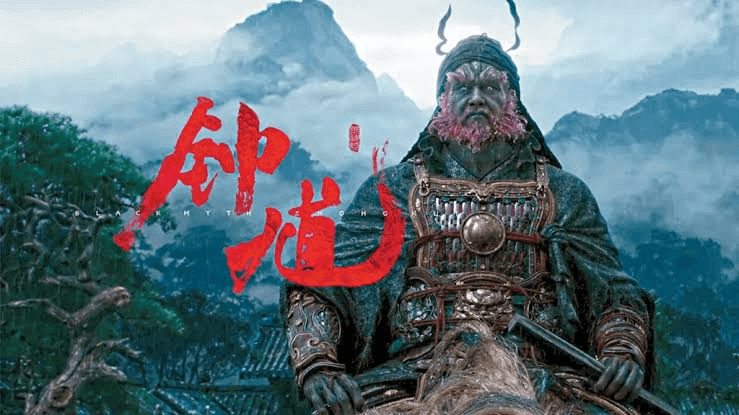
The two characters that make up the name Zhong Kui appear in the historical record earlier than the story of Zhong Kui catching ghosts.
To see where they came from, it helps to start with why anyone needed to drive out ghosts at all.
People in pre-imperial China had few ways to account for illness and death, and sickness was routinely read as the work of spirits.
The Zuo Zhuan, under the tenth year of Duke Cheng, tells of Duke Jing of Jin. He dreamed first of a huge ghost with hair trailing to the ground, beating its chest and stamping, saying it had already petitioned the Lord on High for leave to take its revenge. It smashed through the palace gate and the bedroom door and came in.
The duke woke in terror and called a shaman from Sangtian to read the dream. The shaman's reading matched it exactly.
Not long afterward he fell gravely ill and sent to Qin for a physician. Before the physician arrived, he dreamed again, this time of the illness itself taking the form of two small boys. One said that a good doctor was coming and asked where they could hide. The other answered that if they stayed below the heart and above the diaphragm, nothing could reach them.
The physician arrived, examined him, and said the case was past treating.
The Chinese phrase for an incurable condition comes from that answer.
One illness, two dreams, and both had to be handled through dream-reading and spirits. Driving out ghosts became a rite the court staged every season.
1. The rite required something to hold
The rite was called nuo (傩).
The Rites of Zhou assigns the duty to an office called fangxiangshi. The line reads, in the original, "掌蒙熊皮,黄金四目,玄衣朱裳,执戈扬盾,帅百隶而时难,以索室驱疫."
He wore a bear skin over himself, a mask with four golden eyes, black above and red below, a spear in one hand and a shield raised in the other, and he led a crowd through the palace chambers one by one to force the sickness out.
Zheng Xuan's commentary on the Rites of Zhou explains the bear skin as a means of frightening off the spirits of plague.
By the Eastern Han the production had grown larger. It called for a hundred and twenty boys between the ages of ten and twelve, all in red headwraps and carrying drums, with the fangxiangshi at the front, and at the end of the procession torches were carried out of the palace gate and down to the Luo river.
One detail here is worth holding onto. The fangxiangshi carries a spear. Whoever drives out ghosts has to be holding something.
2. That thing had another name
Pre-imperial China also had a striking tool called zhui, thick at one end and tapering to a point at the other.
In the state of Qi it went by a different name. The Fangyan, a Han dictionary of regional speech, records that the people of Qi called a mallet 终葵, the region in question being north of Mount Tai. The Liji says the same thing more bluntly, that 终葵 is a mallet.
The Kaogongji, describing how a ceremonial jade tablet was cut, specifies that the top of a grand tablet should be 终葵-headed, shaped like the head of a mallet.
What that has to do with driving out ghosts was answered by the Qing philologist Gu Yanwu, who gave 终葵 an entry of its own in volume 32 of his Rizhilu. His answer was that the ancients used a mallet to drive out ghosts, much as they performed the nuo.
He cited a line from Ma Rong's Guangcheng Song, in which performers dance the 终葵 and raise the bar-axe, and read it as a dance performed with mallets to expel spirits.
That citation has since been shown to be wrong. Ma Yong pointed out that the original passage describes winter fishing, breaking ice with a mallet, and has nothing to do with expelling ghosts.
Gu Yanwu is a central figure of Qing evidential scholarship, and his entry was cited for two centuries on the strength of that one quotation. A bad citation inside it says something about how thin the trail is.
Thin, but it continues.
3. How a mallet became a person's name
In the Northern and Southern dynasties, personal names containing 钟葵 suddenly become common.
Yao Xuan of the Northern Wei was originally named Zhongkui, with the courtesy name Bixie, which means "ward off evil." The histories of the period also preserve a run of similar names, among them Yang Zhongkui, Qiu Zhongkui, Murong Zhongkui, Qiao Zhongkui and Duan Zhongkui, with Yu Jin and Zhang Baize both carrying Zhongkui as a courtesy name.
Gu Yanwu gathered them in one place to show that by this period the word had entered people's names, and was usually paired with "ward off evil." Naming someone that way suggests the word itself was thought to keep harm away.
So how did a sound that means mallet come to be written as two characters?
The old Chinese method of fanqie splitting a syllable gives the answer. Read 终葵 quickly, taking the initial of 终 and the final of 葵, and the sound that comes out is zhui, the mallet itself.
终葵 speeded up is a mallet, and a mallet slowed down is 终葵, two faces of one sound. The name took the face that looked better on a person.
The characters used for it today, 钟馗, came later.
终葵 was more often written 钟葵, and occasionally 钟馗. In time 钟葵 fell out of use and 钟馗 became standard.
Lu Eting, in his study Zhong Kui Kao, argues that this substitution built the bridge from one to the other.
At this point there is a name. There is still no god.
4. The god came out of a dream
It took a Tang dynasty dream to turn Zhong Kui into a god.
Shen Kuo, writing in the Northern Song, records that the palace held an old painting of Zhong Kui by Wu Daozi, with a colophon by a Tang author at the head of the scroll.
The colophon describes Emperor Xuanzong falling ill with malaria after reviewing troops at Lishan and failing to recover.
One night he dreamed of two ghosts, one small and one large. The small one, in red, stole a purple perfume sachet belonging to Consort Yang along with the emperor's own jade flute, and ran around the hall with them. The large one, capped and dressed in blue, seized the small ghost, gouged out its eyes and ate it.
Asked who he was, the large ghost said he was Zhong Kui, a jinshi from Mount Zhongnan who had failed the examinations, dashed his head against the palace steps and died, was buried in a green robe by imperial gift, and had sworn to rid the empire of evil. The emperor woke cured, summoned Wu Daozi, told him the dream and had him paint it.
Xuanzong looked at the finished painting and said it matched what he had seen.
This is the most quoted passage about Zhong Kui.
It survives in a Northern Song book, quoting a Tang colophon.
Wu Daozi's painting is long gone, and how much of the passage is Tang and how much accumulated in transmission cannot be sorted out.
The colophon is inconsistent across quotations. Shen Kuo's version reads "failed the examinations," while other records read "failed the military examinations."
The Tang court did have a custom of granting Zhong Kui images to officials along with calendars at the end of the year, and Liu Yuxi wrote a memorial thanking the throne for one.
Hanging a Zhong Kui image to ward off evil was established practice by the Tang and had entered the lists of imperial gifts, and that much holds without the dream.
5. The face was painted over generations
The Zhong Kui people recognize today arrived far later than the name.
The story of Zhong Kui giving his sister in marriage is among the best known parts of the legend, and it arrived later than most people assume.
It was a favorite subject in Ming and Qing drama, and the earliest surviving play is Zhang Dafu's Tianxia Le, now lost except for a single act, "The Marriage."
Trace it further back and the earliest surviving painting titled after the story is by Yan Geng in the late Song or early Yuan, while Gong Kai, working around the same time, painted a scroll of Zhong Kui traveling with his sister.
Ming writers described his duties with the phrase "welcoming fortune, driving out mei, marrying off mei," mei being a spectral nuisance. Since a daughter leaving the household is a marriage, the character was swapped by the late Ming and the story became one about a sister.
The exam failure has versions too.
The earlier form has him "fail the examinations and dash his head against the palace steps," recorded both in the Tang colophon Shen Kuo quotes and in the Tang Yishi and the Tianzhong Ji.
By the Qing novels Zhangui Zhuan and Tang Zhongkui Pinggui Zhuan, he has been moved to the reign of Emperor Dezong, made top graduate, rejected for his looks, and cuts his own throat on the spot. The version in which a spurned scholar kills himself at the palace comes from there.
The costume he wears in portraits works the same way. The sword, the gourd and the brush accumulated as painter after painter reworked the image, and with Wu Daozi's original long gone, the later copies are what made the figure specific.
Sources
- The Zuo Zhuan, tenth year of Duke Cheng, on Duke Jing of Jin, the vengeful ghost and the two boys in the illness
- The Fangyan, the Liji and the Kaogongji on 终葵 as a mallet
- Gu Yanwu, Rizhilu, volume 32, and Zhao Yi's later expansion of the argument
- Shen Kuo, Mengxi Bitan, quoting the Tang colophon, with Shen Kuo's own objections
- Lu Eting, Zhong Kui Kao
- Zheng Xuan's commentary to the Rites of Zhou, and the Eastern Han nuo rite in the Hou Hanshu
- Liu Xicheng, "On Zhong Kui," China Folklore Society
/ By Zhong Kui Team
/ Where the record is thin, or where scholars disagree, the disagreement is stated in the text rather than resolved.
/ Bookmark this hub for the latest news, lore deep-dives, and guides as more information surfaces.